

Have you ever opened a bag of beans and been hit with the scent of wild strawberries or a rich, boozy red wine? You’re likely smelling the results of anaerobic fermentation – a process that has quickly become a favorite in the Baltic specialty scene.
The oxygen-free environment
The term "anaerobic" simply means "without oxygen." In traditional coffee processing, cherries or depulped beans usually ferment in open-air tanks. In the anaerobic method, producers place the coffee into sealed, airtight containers, often made of stainless steel, to completely block out the atmosphere.
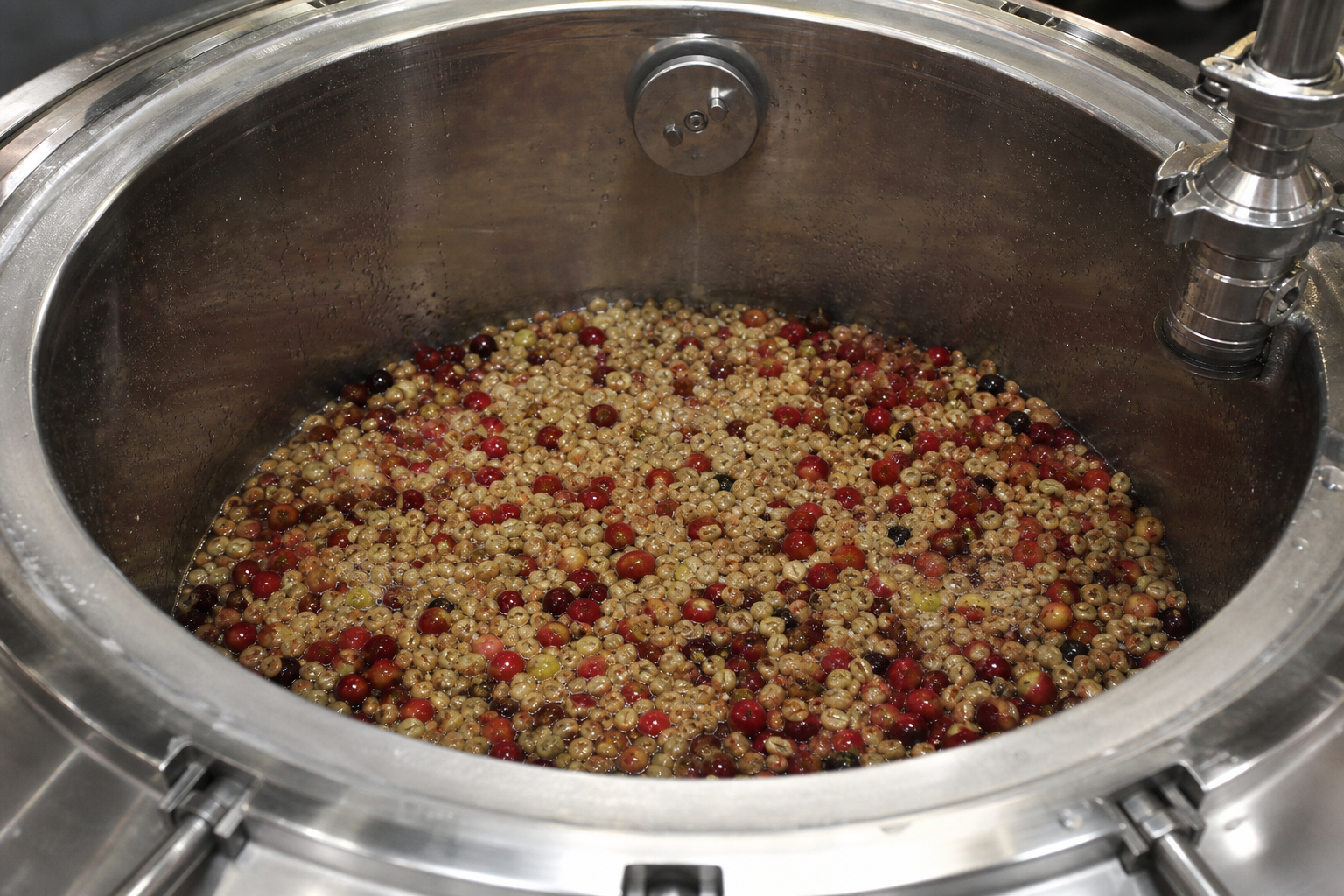
By removing oxygen, producers allow a completely different set of microbes to lead the fermentation. This shift changes the chemical reactions occurring inside the fruit, leading to flavors that are far more intense and distinctive than those typically found in standard specialty coffee profiles.
Pressure and temperature control
In our experience, the beauty of this method lies in the precision it offers. Once the tanks are sealed, carbon dioxide builds up as the natural sugars break down. This increases the internal pressure, which forces the fruit juices and organic acids deeper into the cellular structure of the coffee bean itself.
Producers can also regulate the temperature of these tanks to slow down or speed up the process. Some fermentations last 24 hours, while others, such as DAK Coffee Roasters' Chunky Cherry from Indonesia’s Frinsa Estate, go for 72 hours or more. This control results in a level of complexity and consistency that was once very difficult to achieve in farm environments.
[products ids='15646074143050,15646073717066']
Flavor profiles and aromatics
If you enjoy coffee that tastes like a tropical fruit cocktail, these experimental lots are for you. Many of our customers tell us that anaerobic beans remind them of candy, ripe mango, or even spiced cake. The process highlights bold aromatics that often linger long after the first sip.

Common tasting notes include:
- Tropical fruits like pineapple, passion fruit, and mango
- Creamy textures with nuances of vanilla cake or yogurt
- High-intensity floral aromatics like jasmine or orange blossom
- A pleasant, boozy character similar to sparkling wine or cider
Because these beans are so flavor-dense, they shine when roasters prioritize transparency. This is why we see many anaerobic lots in the discussion about different roast profiles leaning toward the lighter side, as this preserves those delicate, funky acids without masking them with roast character.
[products ids='15646073192778,15646078107978']
Brewing recommendations
Anaerobic coffees can be a little more sensitive to heat because of their high sugar content and unique cell structure. We recommend starting with a slightly lower water temperature – around 90°C to 92°C – to prevent the fermented notes from becoming too overwhelming or bitter.
If you are brewing with a V60 or Chemex, try a slightly coarser grind than you would use for a washed coffee. These beans often produce more "fines," which are tiny coffee particles that can slow down your brew time. Keeping the water moving ensures you capture the clarity of the fruit notes without any unwanted muddiness.
Whether you prefer the funky character of an Indonesian natural or the refined, cake-like profile of a Colombian lot, anaerobic processing offers a look into the future of coffee flavor. It is an exciting time to be an enthusiast in the Baltics, with these unique, experimental coffees becoming more accessible to home brewers every season.
Ready to experience these bold flavors for yourself? Explore our curated selection of experimental lots from Europe’s best roasters.