

For a long time, decaf coffee had a bad reputation for being dull, flat, and papery. In the world of specialty coffee, that stigma belongs firmly in the past.
Today, producers start with high-scoring green beans and apply gentle caffeine removal techniques to preserve delicate fruit acids, sugars, and aromatics. Decaffeination takes place before the green coffee reaches the roaster, and the specific method used can dramatically shape the final character in your cup.
The reality of caffeine in decaf
Decaffeinated coffee is rarely 100% caffeine-free. Most decaf coffees retain between 2 and 15 milligrams of caffeine per eight-ounce cup.
Leaving a microscopic amount behind allows processing facilities to protect the coffee’s natural cellular structure. Stripping away every single trace of caffeine would require harsh processing that destroys the organic acids responsible for bright, complex flavors.
Sugarcane ethyl acetate process
Often referred to as "EA decaf" or "sugarcane decaf," this method is especially popular in Colombia. It relies on ethyl acetate, a naturally occurring compound derived from fermenting sugarcane.
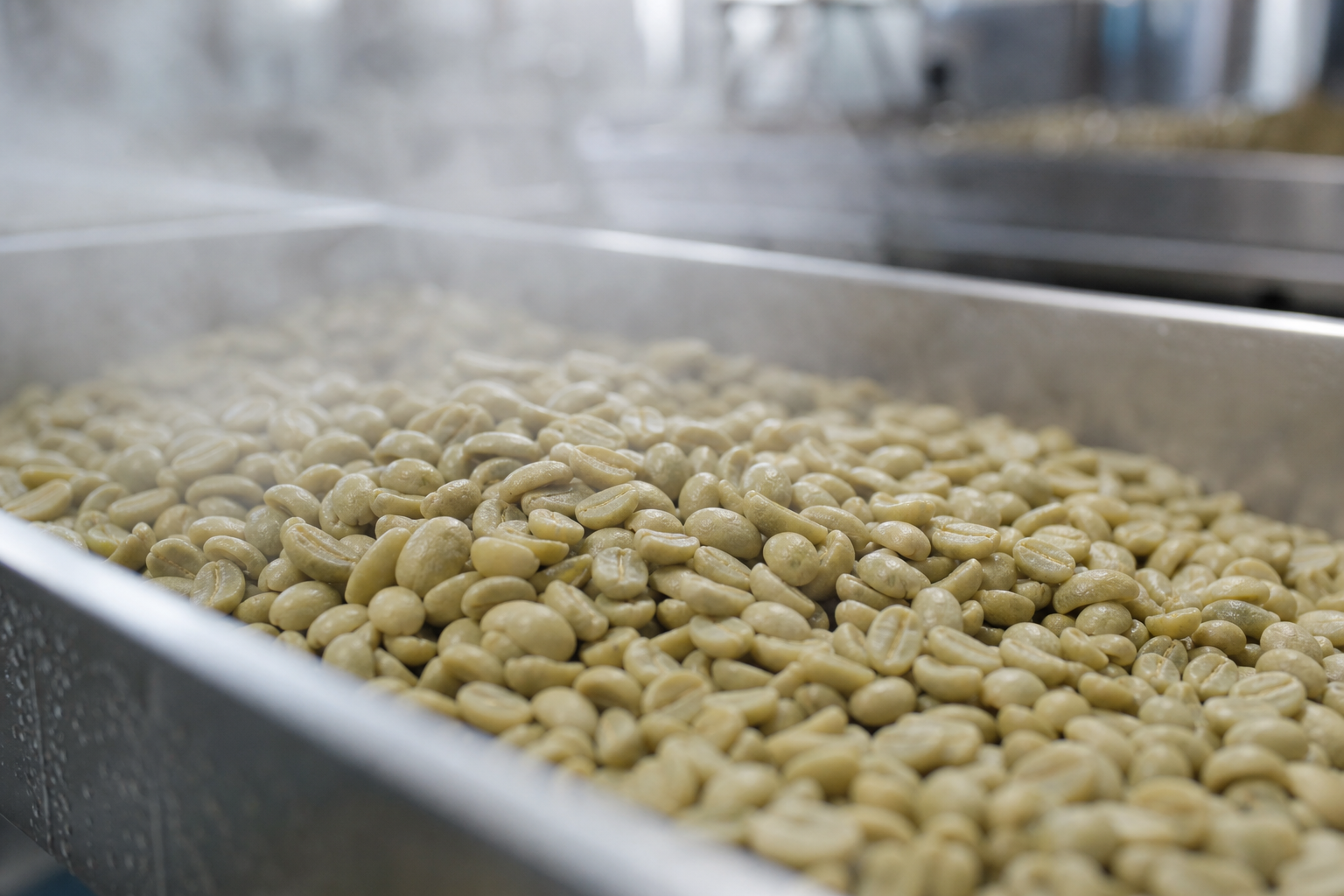
Green coffee beans are first steamed to open their pores and expand. They are then soaked in a water and ethyl acetate solution, where the ethyl acetate selectively binds to caffeine molecules and draws them out of the bean.
Because ethyl acetate is highly selective, it targets caffeine while leaving natural sugars, lipids, and fruit acids behind. In our experience, sugarcane decaf retains an incredible amount of origin character, offering high sweetness and balanced acidity.
Goodlife Melao Decaf Colombia by Goodlife is a prime example of this technique, featuring sweet notes of red apple, marzipan, and juicy toffee.
[products ids='15593842049354']
Swiss Water process
The Swiss Water process removes caffeine using only pure water, temperature, and time – without any added chemical solvents.
First, green coffee beans are soaked in hot water to extract all soluble solids, including flavor compounds and caffeine. This initial batch of beans is discarded, and the liquid is passed through a carbon filter that selectively traps caffeine. The result is Green Coffee Extract (GCE), a liquid saturated with coffee sugars and flavor solids, but zero caffeine.
When a fresh batch of green coffee is submerged in this GCE, an osmotic balance occurs. Because the GCE is already full of flavor solids, only caffeine migrates out of the new beans into the liquid.
While water decaffeination can slightly soften delicate floral notes compared to traditional washed vs natural processing, it produces a clean, crisp cup with zero chemical residue.
Supercritical CO₂ method
This modern method uses carbon dioxide under intense pressure and temperature. In this state, CO₂ becomes "supercritical," taking on properties of both a gas and a liquid.
Moistened green coffee beans enter a pressurized extraction vessel where supercritical carbon dioxide circulates through them. The CO₂ acts as a solvent, dissolving caffeine while leaving carbohydrates, proteins, and aromatic oils untouched.
Because carbon dioxide is so selective, this method is exceptionally gentle on flavor precursors. The primary tradeoff is the need for heavy industrial equipment, making it less common for small micro-lots than sugarcane EA processing.
Decaf bean structure and extraction
Decaffeination changes the physical structure of raw coffee beans. Because the beans undergo soaking, steaming, and drying, their cell walls become softer and more porous.
During roasting, decaf green coffee absorbs heat much faster than regular green coffee. The beans often appear darker even at a lighter roast degree.
When brewing decaf at home, water passes through ground coffee more easily due to this increased porosity. We recommend grinding slightly finer than you usually would for regular beans and keeping your water temperature around 90°C–92°C to avoid over-extracting bitter notes.
Low-caffeine alternatives
If you want to reduce your caffeine intake without removing it completely, low-caf blends offer a smooth middle ground.
Many of our customers tell us that low-caf options are ideal for late-afternoon brewing when you want the rich comfort of a filter coffee without impacting your night's sleep.
HAYB Chillwave Lowcaf Blend by HAYB mixes regular specialty beans with decaffeinated lots to give you a light boost without the jitters.
[products ids='15834177929546']
Quality decaf coffee is no longer an afterthought – it is a craft in its own right. Explore our curated selection of decaffeinated specialty coffee to find sweet, aromatic beans from top European roasters for your next brew.