

Have you ever looked at a coffee bag and wondered why it’s labelled "honey" when there isn't a bee in sight? It is one of the most unique ways to prepare coffee, sitting right between the clarity of washed beans and the wild sweetness of naturals.
The sticky truth about mucilage
In the world of specialty coffee, the "honey" refers to the sticky, sugary layer of fruit called mucilage that surrounds the coffee seed. When farmers use this method, they depulp the cherry to remove the outer skin but leave a specific amount of that sticky substance on the bean while it dries.
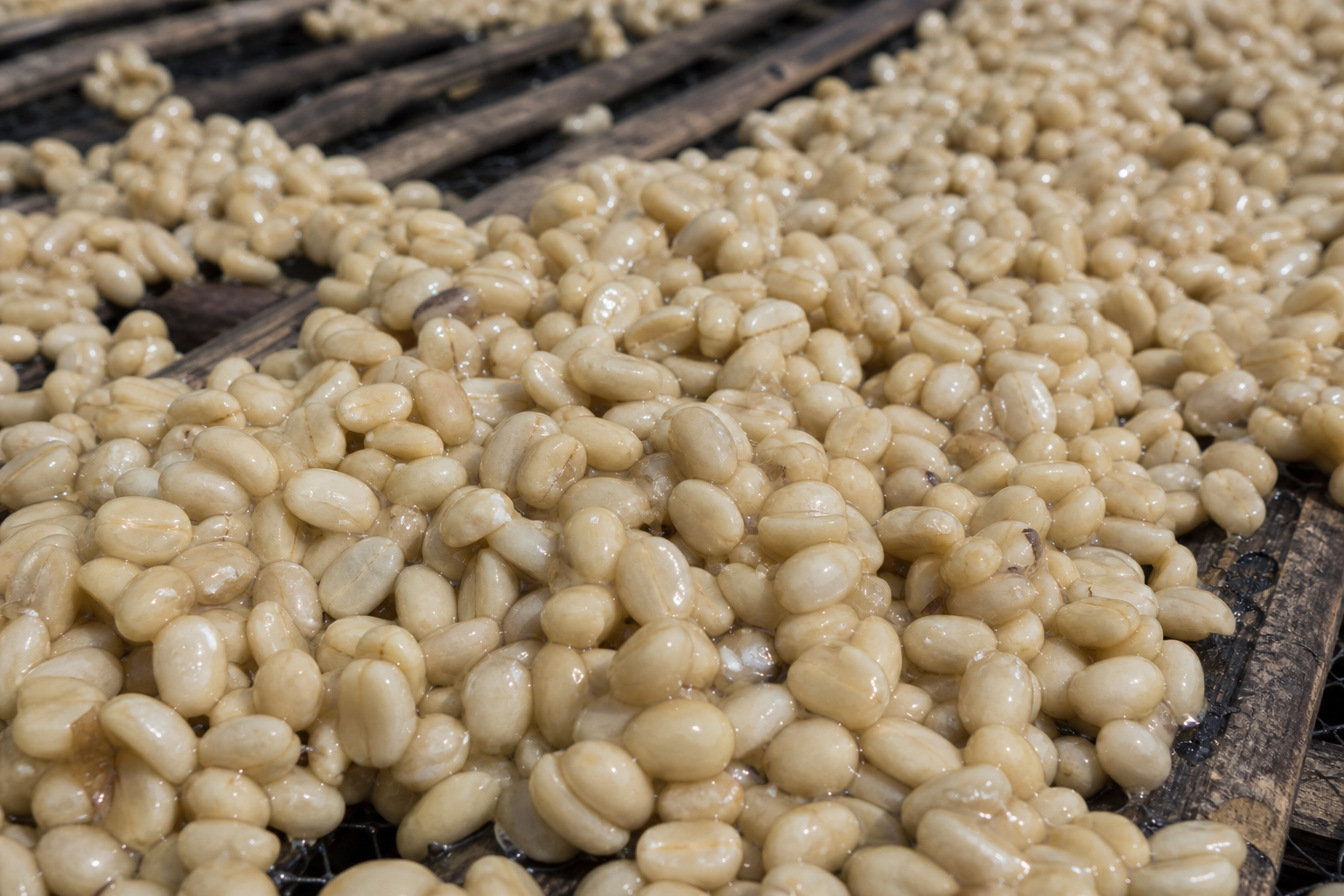
The mucilage stays attached to the bean throughout the drying phase on raised beds or patios. This allows the sugars to concentrate and interact with the seed, creating a profile that is famously sweet and heavy in body. Unlike other methods, this fruit material is only removed during the final milling stage once the beans are completely dry.
[products ids='15593842311498']
Comparison with washed and natural beans
To truly appreciate these beans, it helps to see where they sit on the processing spectrum. Think of it as a bridge between the two traditional methods. In washed process coffee, the fruit and mucilage are completely scrubbed off before drying. This results in a clean cup with high clarity and bright acidity.
On the opposite end, natural process beans dry inside the whole cherry. This often leads to intense, wine-like fruitiness and a heavy mouthfeel. Honey processing offers a middle ground, capturing the rounded sweetness and creamy body of a natural while maintaining the refined acidity and cleanliness of a washed coffee.
[products ids='15544642142538,15544642011466']
Honey process flavor profile
If you enjoy a coffee that feels smooth and balanced, this method is likely your best friend. Many of our customers tell us they love honey-processed lots because they lack the sharp, aggressive acidity sometimes found in light-roast washed beans.
Common flavor characteristics include:
- Distinctive sweetness resembling brown sugar, cane syrup, or actual honey.
- Notes of stone fruits like apricot, plum, or peach.
- A creamy, syrupy, or velvety texture on the tongue.
- Softer, more integrated acidity compared to the sparkling nature of other methods.
[products ids='15398908428618']
The honey color spectrum
You might notice roasters using terms like "White Honey" or "Black Honey." This isn't just marketing; it tells you exactly how the coffee was handled. The color typically refers to how much mucilage was left on the bean and the speed of the drying process.
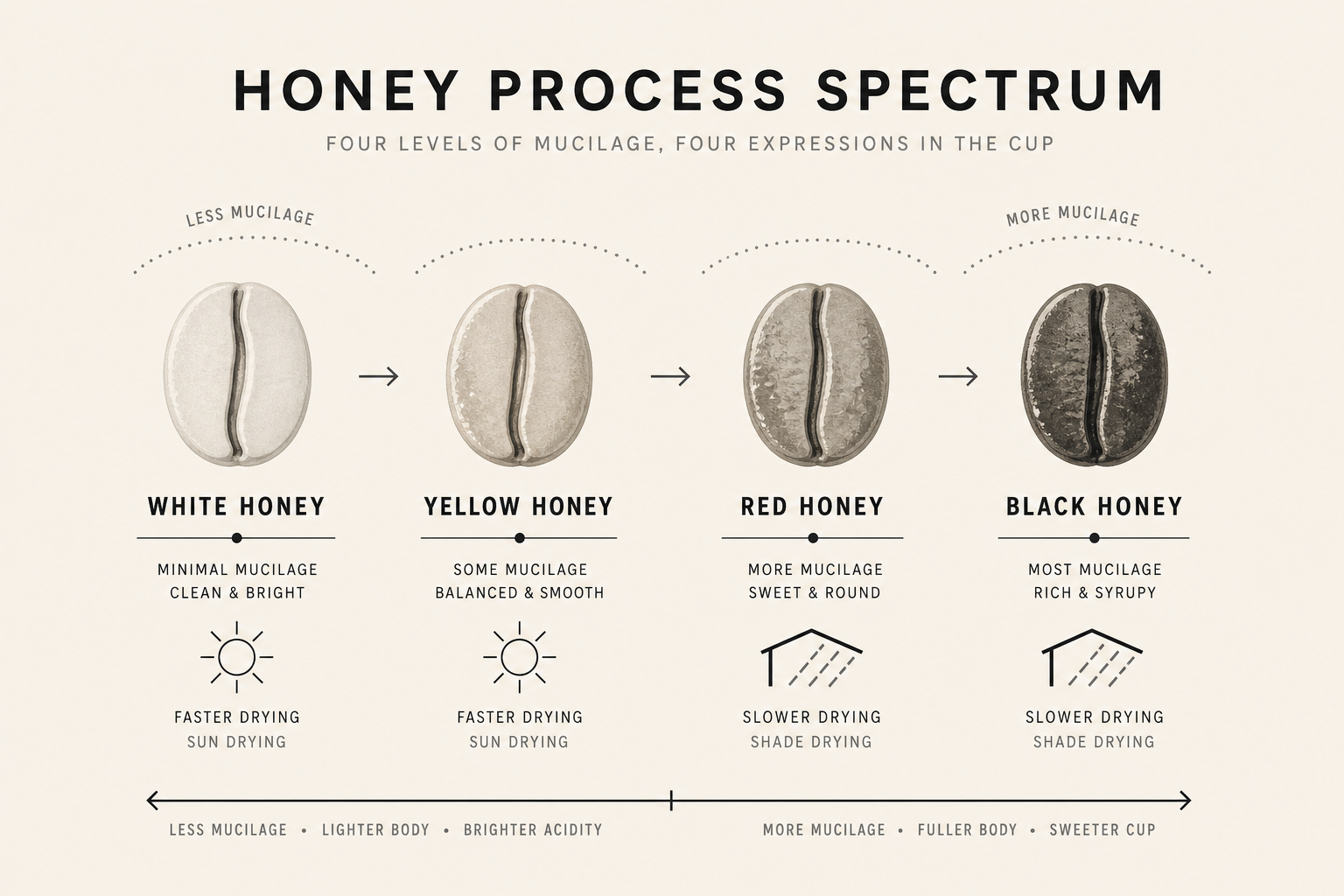
White and yellow honey coffees have the least amount of fruit left on the bean. They are often dried in direct sunlight to speed up the process, resulting in a flavor that is light, floral, and citrusy. These are the closest relatives to the washed profile.
Red and black honey coffees have significantly more mucilage left on the seed. They are often dried in the shade to slow down the process, which allows for more complex development. This leads to a much deeper sweetness, a thicker body, and flavors reminiscent of dark berries or jam.
Brewing recommendations
Because these beans have a higher sugar content, they can be a little more sensitive to heat. We recommend starting with a slightly coarser grind than usual to avoid bitterness. In our experience, honey-processed coffees perform beautifully as a pour-over when using water around 92°C to let those stone fruit notes shine.
If you prefer a more textured cup, they also make incredible espressos. The inherent syrupy body creates a rich, lingering finish that pairs perfectly with milk or stands strong as a sweet, standalone shot. Whether you are looking for the refined fruit of a Rwandan lot from HAYB or exploring offerings from other top European roasters like Crooked Nose Coffee, this processing method offers a balance that is hard to beat. Pick up a bag of honey-processed beans today and see how that signature creamy sweetness transforms your morning ritual.