

Ever wonder why your stovetop brew lacks the silky texture of a cafe shot? While both methods deliver an intense cup, the path they take to get there – and the flavor they leave behind – is worlds apart.
The myth of stovetop espresso
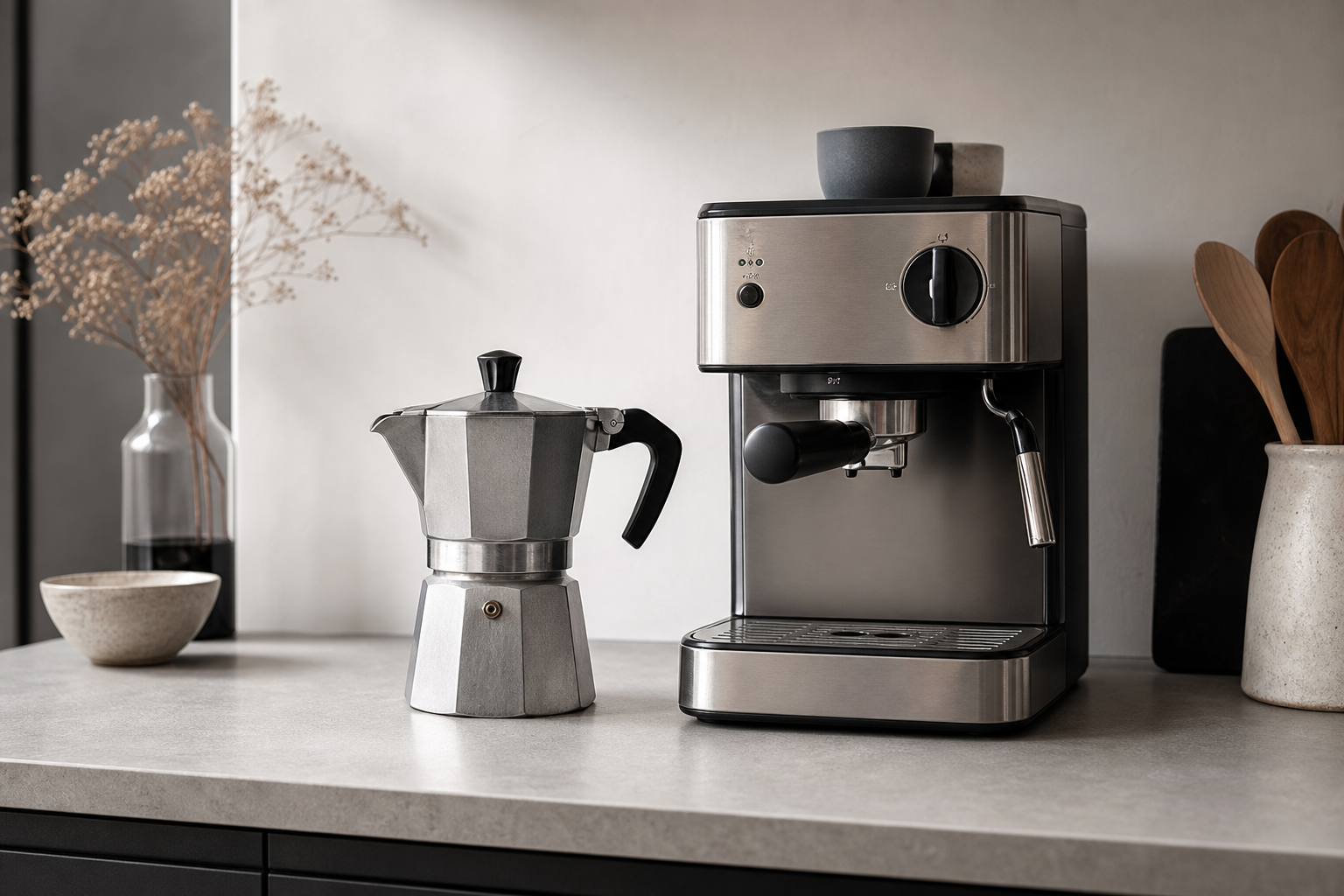
Many people call the moka pot a stovetop espresso maker, but this is a bit of a misnomer. In our experience, it is helpful to think of the moka pot as its own unique category: a punchy, rustic brewer that sits comfortably between filter coffee and espresso.
While it produces a heavy, concentrated coffee that is much stronger than a standard drip brew, it lacks the technical characteristics of a true espresso shot. Real espresso requires specific parameters regarding pressure and flow that a stovetop pot simply cannot reach.
Pressure and the quest for crema
The biggest technical difference between these two methods is pressure. A traditional espresso machine uses a pump to force water through a puck of coffee at about 9 bars of pressure. This high intensity is what emulsifies the coffee oils and creates that signature layer of golden foam we call crema.
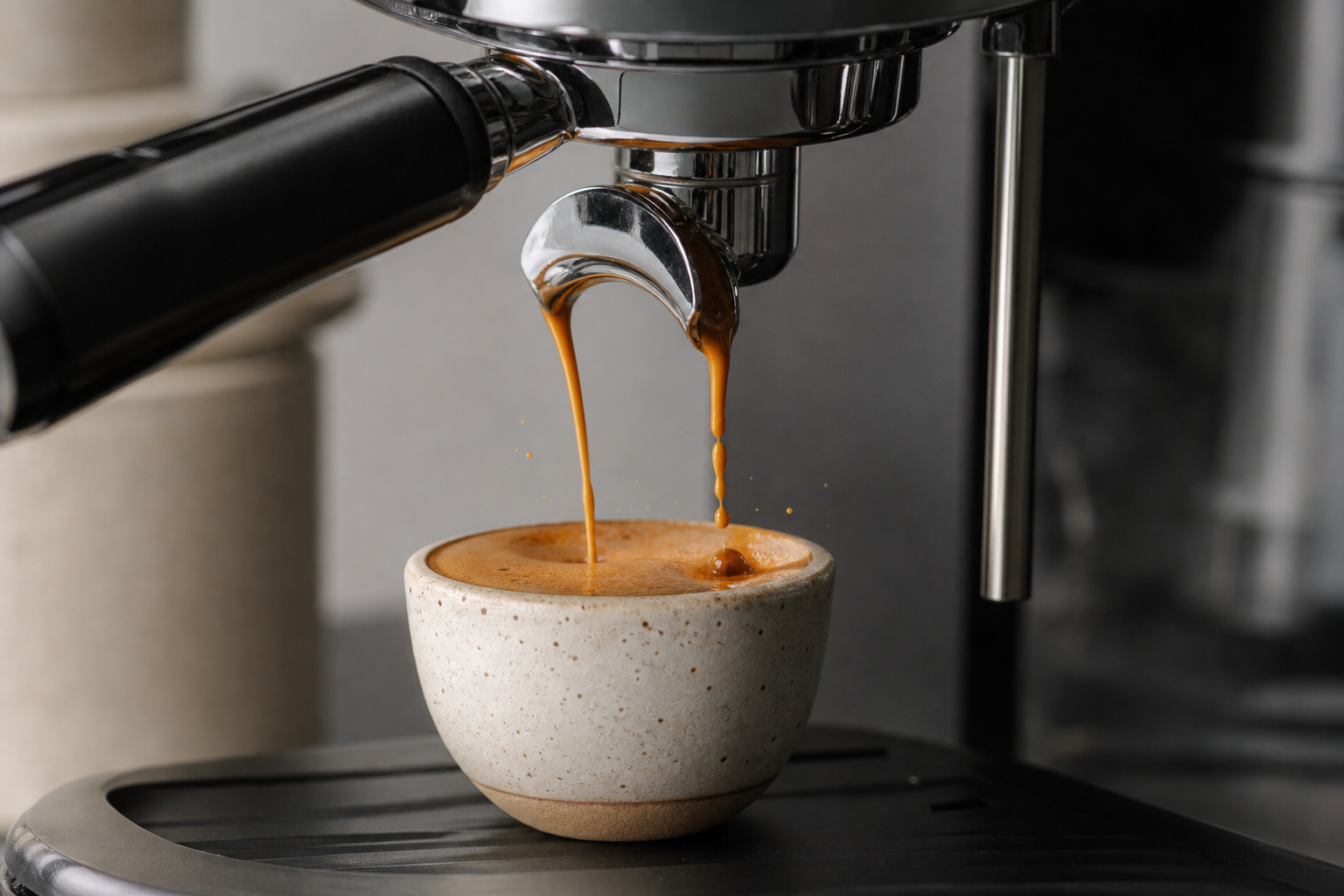
In contrast, a moka pot relies on steam pressure, which typically only reaches about 1.5 to 3.5 bars. Because the pressure is significantly lower, you won’t get that thick, stable crema. Instead, the moka pot gives you a deep, textured body that stands up beautifully when you mix it with milk.
Flavor profiles and intensity
Because moka pots sit directly on a heat source, the water temperature can get quite high. If you aren't careful, this can lead to a bit of bitterness or a slightly charred edge. However, when managed well, it produces a rich, chocolatey cup with a lot of weight.
An espresso machine offers more control. You can fine-tune the temperature and flow to highlight delicate acidity or floral notes. Many of our customers tell us they prefer the espresso machine for the clarity it provides, especially when working with high-quality specialty espresso coffee beans.
For those who enjoy a balanced, fruity cup, we recommend these selections:
[products ids='15646077649226,15544641978698']
The Yellow Mellow from DAK brings a bright, citrusy profile, while the Ethiopia Hambela from Nomad offers a juicy, cherry-like sweetness that shines under high pressure.
Practicality and ritual
The moka pot is the king of simplicity. It’s portable, nearly indestructible, and requires very little space in your kitchen. It’s a great choice if you want a strong morning cup without a complicated setup. The only real learning curve is learning how to grind coffee beans correctly – you want a grind that is fine, but not quite as powdery as what you would use for a professional espresso machine.
Owning a home espresso machine is more of a dedicated hobby. It requires a specific grinder, regular cleaning, and a bit of practice to get the "dialing in" process right. It’s a rewarding ritual for those who love the craft, but it does take up significantly more room on your kitchen counter.
Initial investment and long-term cost
There is no getting around the fact that the price gap is wide. You can pick up a high-quality moka pot for anywhere between €20 and €100. It will likely last a lifetime with nothing more than a new rubber gasket every few years.
A reliable home espresso machine is a more significant investment. While entry-level models exist, a setup that can truly replicate cafe-quality results usually starts around €500 and can climb much higher. You also need to factor in a high-quality burr grinder, which is essential for the machine to work as intended.
If you are looking for beans that work exceptionally well across both methods, these options offer great versatility:
[products ids='15593841951050,15613878698314']
The Shantawene from Good Life is an "omni-roast," which means it is designed to taste great as both filter coffee and espresso. The Candy Shop blend from Kalve is perfect for those who want a fruity, berry-forward profile in their moka pot.
The right choice for your kitchen
Choosing between a moka pot and an espresso machine really comes down to what you value most in your morning routine. If you want a simple, affordable, and durable way to make a strong cup that pairs well with milk, the moka pot is a classic for a reason.
If you are a hobbyist who wants to explore the nuances of different origins and achieve that silky, cafe-style crema, an espresso machine is worth the investment. No matter which tool you choose, the quality of your beans remains the most important factor. Take a look at our current selection of fresh roasts to find your next favorite bag.