

Ever wondered why your coffee bag lists "strawberry jam" when the contents are just brown beans? If you feel like you're missing the secret code to specialty coffee, you're in the right place. Let’s look at how to read those labels like a pro.
Origin of flavor descriptors
When you see a note like "milk chocolate" or "red currant" on a bag, it doesn't mean the roaster added syrups or flavorings. These terms describe the inherent characteristics of the coffee bean itself, which are shaped by soil chemistry, altitude, and the coffee variety.
In our experience, these notes are more like a flavor map than a literal promise. Roasters identify these nuances through a process called cupping, where they evaluate the bean's sweetness, acidity, and body. Think of it like describing a fine wine; you are looking for familiar taste markers to categorize the complex sensory experience of every sip.

Processing and flavor profiles
One of the easiest ways to predict what you will taste is to look at the processing method. If you enjoy a clean, crisp cup with bright acidity and floral notes, look for washed process beans. This method removes the fruit early, allowing the bean's specific origin character to take center stage.
On the other hand, natural process coffee is dried with the fruit still attached. This allows the sugars to ferment and soak into the seed, resulting in a heavier body and bold, fruit-forward flavors like ripe berry or tropical fruit. If a bag mentions "funky" or "wine-like" notes, it is almost certainly a natural or anaerobic lot.
[products ids='15593841852746,15590597984586']
Steps for intentional sipping
Identifying these delicate notes requires focus, but it shouldn't feel like a chore. The first step is to engage your nose before your tongue, as a significant portion of what we perceive as flavor is actually aroma. We recommend smelling your coffee as soon as you finish grinding to catch those volatile aromatics before they disappear.
When you finally take a sip, try slurping. It feels a little silly at first, but drawing air into your mouth helps spray the coffee across your entire palate. This oxygenation makes it much easier to separate a "citrus" acidity from a "stone fruit" sweetness. Also, pay attention to the temperature; as the coffee cools, the perceived acidity often changes, revealing hidden notes that were masked by the initial heat.
The flavor wheel hierarchy
The Specialty Coffee Association (SCA) uses a flavor wheel to help tasters stay consistent. It works from the center outward. You start with broad categories – is it fruity, nutty, or floral? Once you decide it's "fruity," you move to the next ring to determine if it is a citrus fruit or a berry.
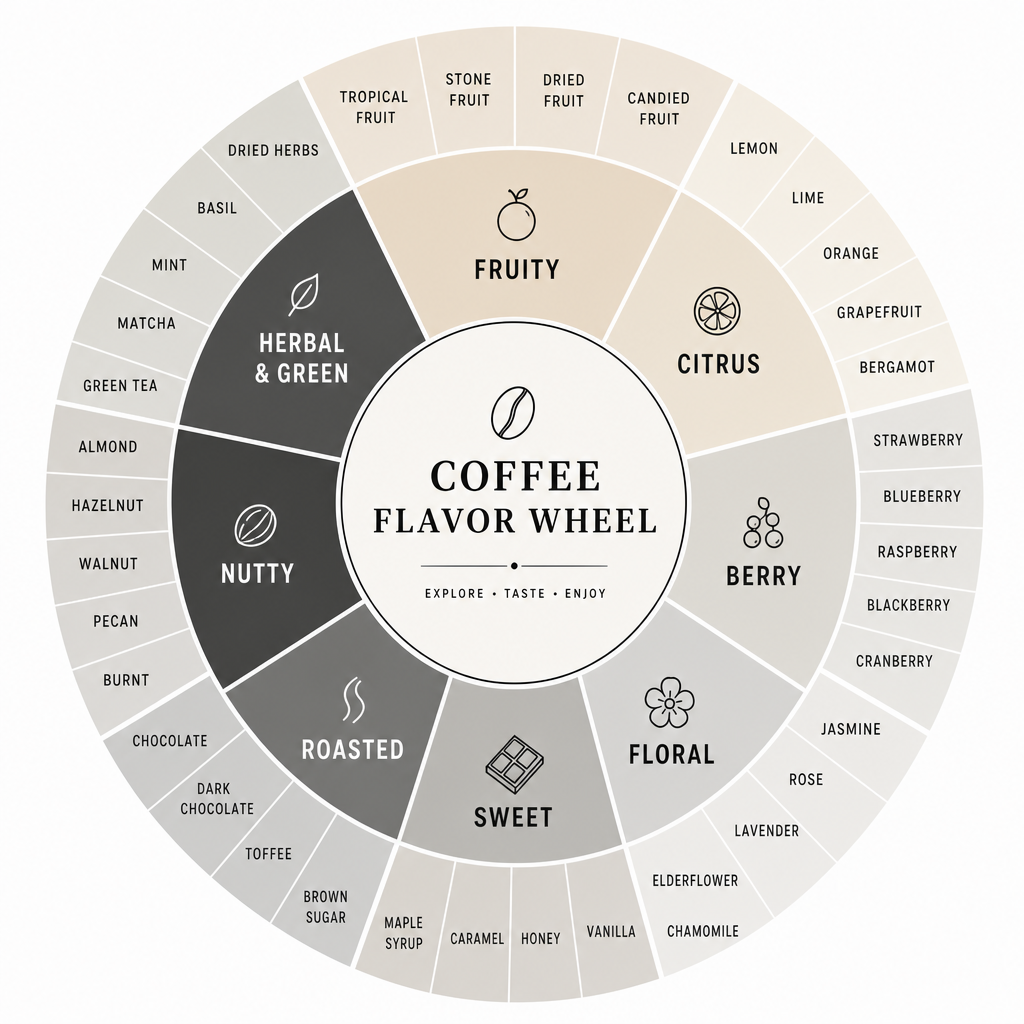
Many of our customers tell us that using this broad-to-specific approach helps them move past the "it just tastes like coffee" phase. If you are brewing a light roast, you will likely find yourself on the floral and fruity side of the wheel. If it is a darker espresso roast, your palate will likely lean toward the nutty and cocoa sections.
[products ids='15398908690762,15544642142538']
Regional flavor patterns
While every farm is unique, certain regions often follow specific flavor scripts. In the Baltics and Scandinavia, we have access to incredible variety, but these three origins are great benchmarks for your palate:
- Ethiopia: Often the gateway into specialty coffee. Expect tea-like bodies, intense florals (like jasmine), and vibrant citrus or berry notes.
- Brazil: The gold standard for comfort. These beans are typically low in acidity with a heavy body and clear notes of hazelnut and dark chocolate.
- Colombia: Known for balance. You will often find a pleasant mix of caramel sweetness and red fruit acidity.
Learning to spot these nuances is a journey that starts with curiosity. The next time you brew a cup, take a moment to look at the bag, wait for it to cool slightly, and see if you can find that hint of stone fruit or chocolate hiding in the brew.
If you are ready to put your palate to the test, explore our full collection of freshly roasted beans and see which descriptors resonate with you.